
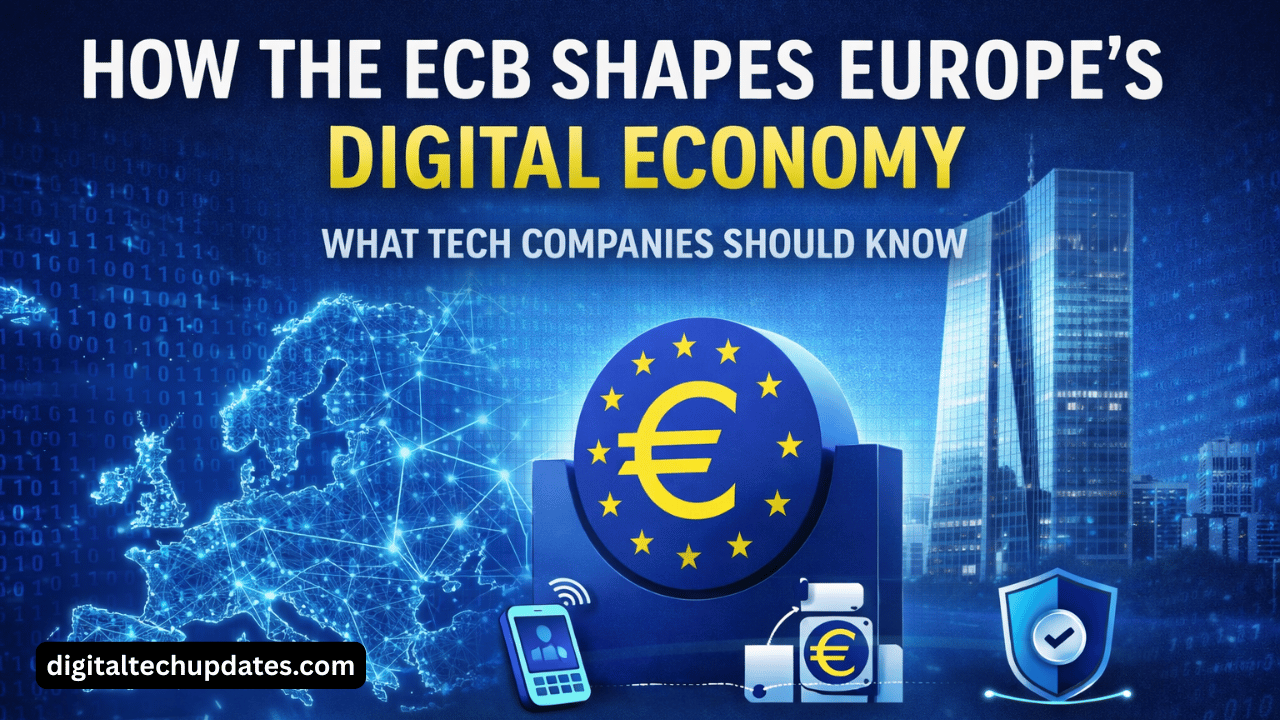
The European Central Bank is a main bank shaping Europe’s financial stability, payment systems, inflation controls, and overall regulatory framework within the EU area. For each company that has a connection with Europe, either established there or trading with the EU, understanding the ECB’s decisions is critical for navigating funding, compliance, and future innovations.
The ECB is an institution responsible for maintaining price stability (just like any other central bank) and overseeing the Eurozone’s financial system. In today’s digital economy, understanding the ECB’s role goes beyond traditional monetary policies. As tech becomes embedded in payments, lending, and data infrastructure, the ECB’s decisions can influence everything from interest rates to digital payment regulations and cybersecurity and privacy standards.
How the ECB works – Decisions, structure, and main objectives
So, what is ECB’s main idea for existence? It is the central bank for the European Union, and it plays a key role in defining the main monetary policies, like interest rates. It operates through several key bodies, with the Governing Council at its center. This group sets interest rates, adjusts asset-purchase programs, and determines how the eurozone responds to inflation. The main goal of the ECB is price stability, but its decisions create ripples, sending waves to the entire European economy, including the tech sector.
Policy meetings
Policy meetings follow a predictable structure, like economic analysis, inflation projections, and decisions on tightening or easing monetary conditions. These choices directly influence markets through banks, investment firms, and funding institutions.
When interest rates rise, loans and credits become more expensive, which slows down venture capital activity and increases the cost of scaling for startups, making it trickier to get funds to develop your tech startup. When rates fall, funding becomes cheaper as banks lower interest rates.
Quantitative easing (QE)
Quantitative easing (QE) is another major tool. When the ECB buys assets, liquidity increases and risk appetite grows; this often boosts tech valuations and helps early-stage companies secure capital. Overall, ECB policymaking has a powerful and direct effect on the financial environment in which Europe’s tech ecosystem operates.
ECB policies that impact the digital economy
Interest rates define borrowing costs for consumers, businesses, and investment firms. For tech founders, high rates translate into slower funding cycles, harsher loan conditions, and more risk-averse investors. Low rates, on the other hand, promote economic growth, allow easier borrowing, and push capital into innovative sectors such as AI, blockchain, and fintech.
One of the most influential ECB initiatives is the digital euro. Unlike crypto, it is a regulated central bank digital currency designed to improve security, improve cross-border transaction efficiency, and support faster digital transactions. When it is launched, the digital euro will reshape how fintech wallets, neobanks, POS systems, and payment apps operate.
Through the Single Supervisory Mechanism, the ECB oversees eurozone banks and sets standards for the whole EU zone, including the fintech sector. The ECB policies dictate onboarding, KYC/AML checks, fraud detection tools, transaction monitoring, and data-handling policies.
Practical implications for tech companies
ECB-set standards influence tech teams to adopt unified payment systems, secure APIs, and strong authentication. Products must be designed with regulatory alignment in mind, from encryption choices to settlement methods. Fintechs must adapt to stricter KYC/AML expectations, better reporting tools, and transparent data flows. This heavily influences backend architecture and automated monitoring systems. As a result, compliance is part of product design. Interest rate changes affect how tech firms grow. Low-rate environments fuel expansion, hiring, and R&D. High-rate periods push companies to prioritize cash flow and operational efficiency.
Conclusion
The ECB plays an important role in shaping Europe’s digital economy, influencing everything from funding conditions to payment infrastructure and compliance standards. For tech companies, understanding how ECB policies work is no longer optional; it is a strategic advantage. As digital payments expand, regulations tighten, and innovation accelerates, staying aligned with ECB direction helps businesses navigate risks, predict market changes, and build products that fit Europe’s financial future.