What is the Factorial of 100? The Complete Guide & Calculation

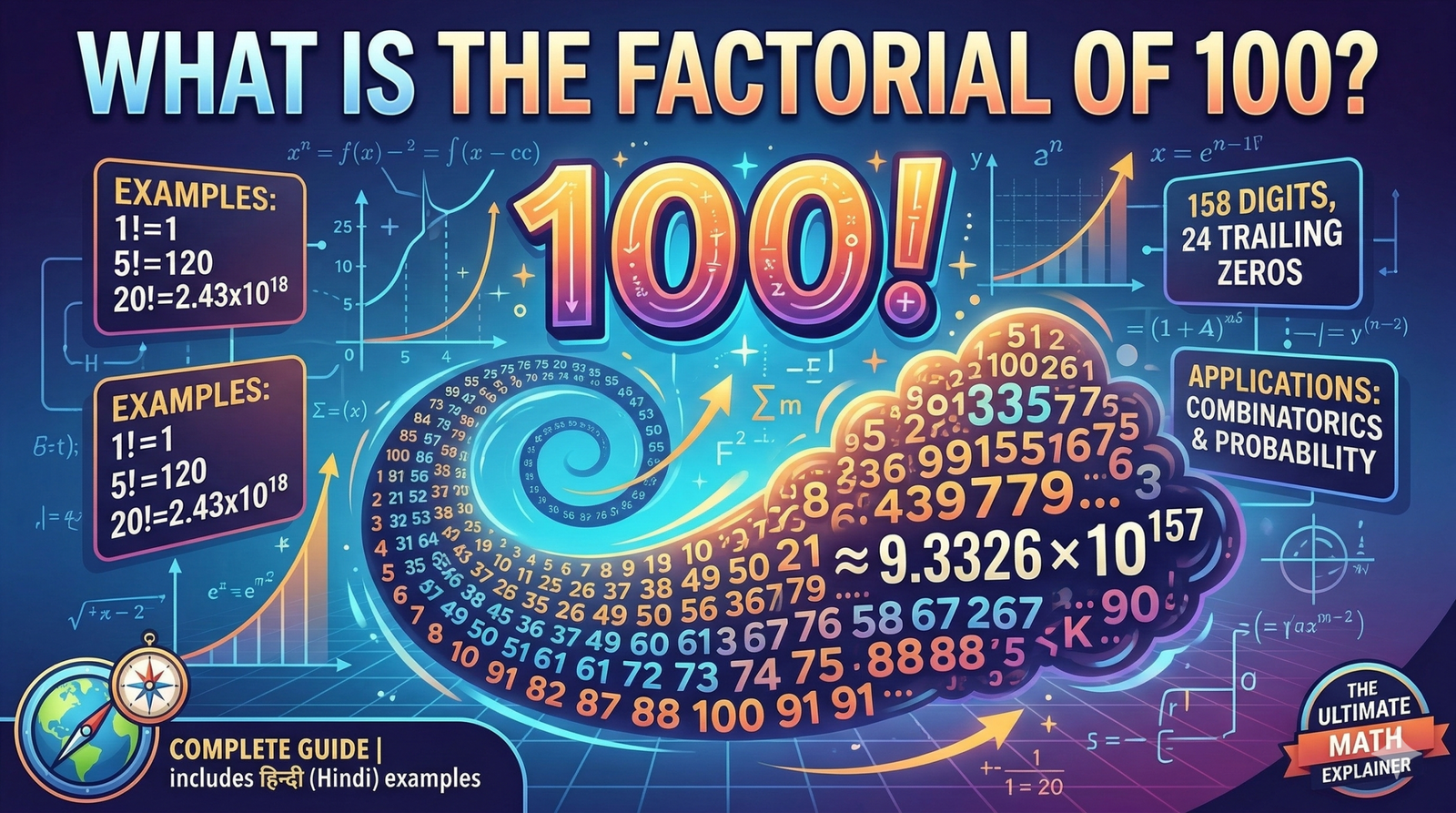
If you are searching for what is the factorial of 100, you are looking for one of the most massive numbers commonly encountered in standard mathematics. In mathematics, the factorial of a non-negative integer $n$, denoted by $n!$, is the product of all positive integers less than or equal to $n$.
For those looking for the exact answer right away:
The exact value of the factorial of 100 (100!) is a 158-digit number:
93,326,215,443,944,152,681,699,238,856,266,700,490,715,968,264,381,621,468,592,963,895,217,599,993,229,915,608,941,463,976,156,518,286,253,697,920,827,223,758,251,185,210,916,864,000,000,000,000,000,000,000,000
In scientific notation, this is written approximately as $9.3326 \times 10^{157}$.
Understanding the Math: What is Factorial of 100?
To understand what is factorial of 100, we have to look at the basic factorial formula:
Therefore, the factorial of 100 is calculated by multiplying 100 by every whole number below it, all the way down to 1:
Because this repeated multiplication grows so quickly, calculating what is the factorial of hundred requires advanced computational software; a standard smartphone calculator will simply display an “Error” or “Overflow” message because the number exceeds its memory limits.
Examples to Help Visualize Factorial Growth
To truly grasp the sheer size of 100!, it helps to look at smaller examples. Notice how incredibly fast the numbers scale:
| Expression | Calculation | Result |
| 1! | 1 | 1 |
| 5! | $5 \times 4 \times 3 \times 2 \times 1$ | 120 |
| 10! | $10 \times 9 \times \dots \times 1$ | 3,628,800 |
| 20! | $20 \times 19 \times \dots \times 1$ | 2,432,902,008,176,640,000 |
By the time you reach 20!, you are already at a number in the quintillions. By the time you multiply all the way to 100, the result has 158 digits!
How Many Trailing Zeros are in the Factorial of 100?
A very common question related to this topic is figuring out how many zeros are at the end of the number. If you look at the exact 158-digit number above, you’ll see a long string of zeros at the end.
To find the number of trailing zeros, we count how many times the number 5 fits into 100, because every pair of (2 $\times$ 5) in the multiplication creates a trailing zero (and there are always more 2s than 5s).
The Calculation:
-
Divide 100 by 5 = 20
-
Divide 100 by 25 ($5^2$) = 4
-
Add them together: 20 + 4 = 24 trailing zeros.
Frequently Asked Questions (FAQs)
1. Can Excel calculate the factorial of 100?
Excel can approximate it. If you use the formula =FACT(100), Excel will return 9.33262E+157. It uses scientific notation because the exact 158-digit precision is too long for standard spreadsheet cells.
2. What is the factorial of hundred used for?
In real life, large factorials like 100! are used in combinatorics, probability, and statistics. For example, if you have 100 distinct items (like a deck of 100 unique cards), 100! represents the total number of different ways you could possibly shuffle or arrange them.
3. Is there a faster way to approximate it?
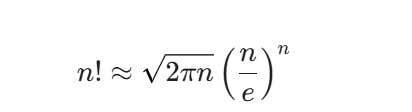
Yes! Mathematicians use Stirling’s Approximation to quickly estimate large factorials without doing 99 multiplications. The formula is:

Thalla Lokesh
Thalla Lokesh is a Digital Marketing Strategist and SEO Specialist with over 12 years of experience in helping businesses grow their online presence. Since beginning his career in 2013, he has successfully worked across industries including healthcare, education, technology, and e-commerce. He specializes in search engine optimization (SEO), content marketing, keyword strategy, and link building, with a strong focus on delivering measurable results. Lokesh has helped brands achieve top rankings on Google through data-driven strategies, high-quality content, and ethical SEO practices aligned with search engine guidelines. As the founder of Honey Web Solutions , a Tirupati-based digital marketing company, he actively works with clients to improve organic traffic, lead generation, and online visibility. He also contributes expert insights on digital marketing trends, AI SEO, and content strategies through blogs and industry platforms.