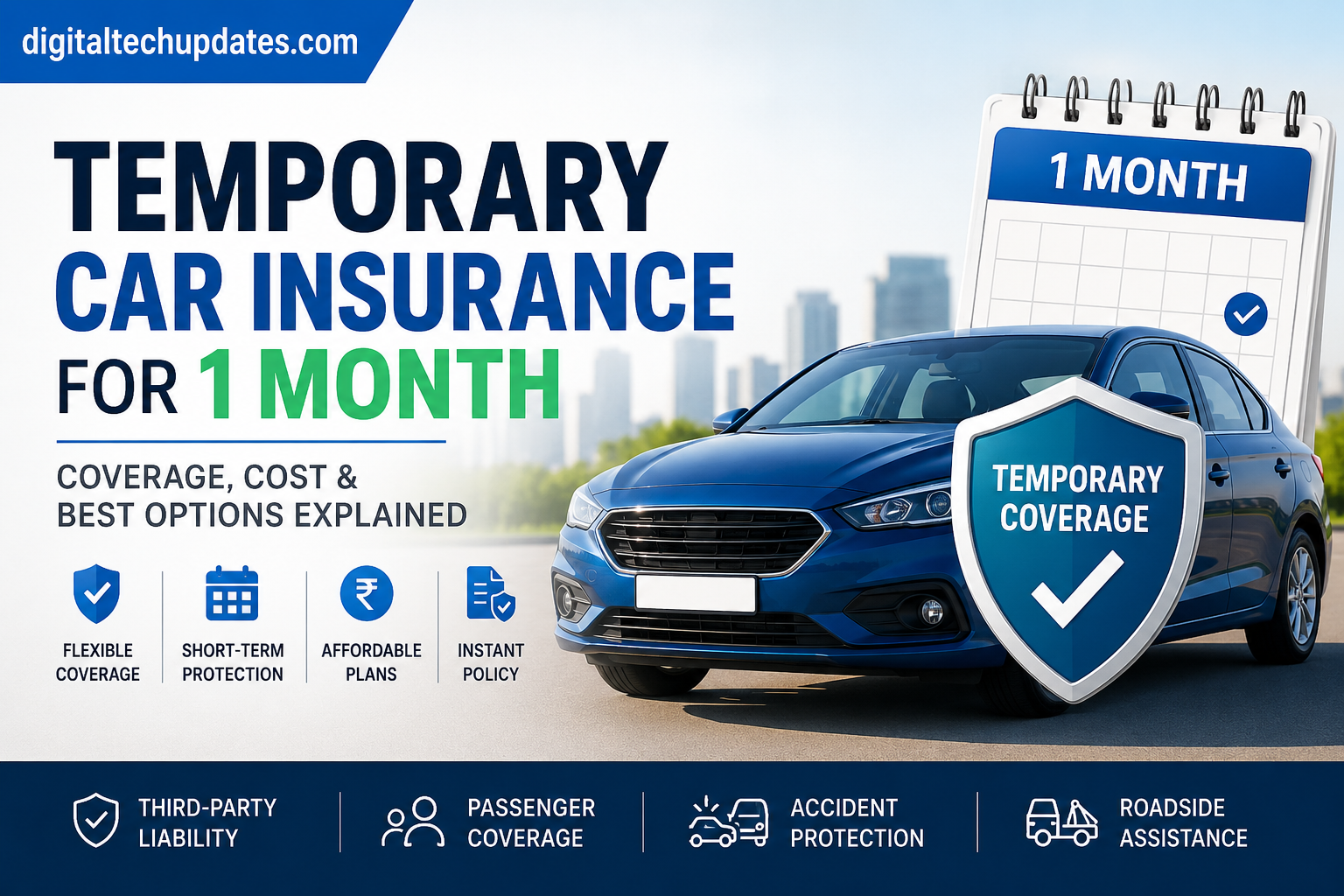
Temporary Car Insurance for 1 Month: Everything You Actually Need to Know

Let’s Be Honest First: Does 1-Month Car Insurance Actually Exist?
Here’s something most websites won’t tell you upfront: true 1-month or “temporary” car insurance doesn’t really exist in the United States — at least not from any reputable, licensed insurer. That might sound frustrating, but don’t close this tab yet. There are several legitimate ways to get the short-term coverage you need, and knowing the truth is the first step to finding the right option.
Most major U.S. insurance companies write policies in 6-month or 12-month terms. The reason is simple: the administrative costs of running a policy — underwriting, paperwork, claims processing — don’t make financial sense for anything shorter. So if you’re seeing ads for “30-day car insurance from $9/day,” be very cautious. Many of those are either misleading or outright scams.
Websites advertising guaranteed 1-day or 1-week U.S. car insurance with no carrier name are almost always fraudulent. Always verify any provider through the NAIC Consumer Information Source (naic.org) before paying a cent.
Who Actually Needs Temporary Car Insurance for 1 Month?
The need is completely real, even if the product isn’t perfectly packaged. People look for one-month coverage in situations like:
- Borrowing a family member’s car while visiting for a few weeks
- Buying a car you plan to quickly resell — no point in a year-long policy
- College students home for winter or summer break who don’t drive during the semester
- Moving across the country and needing rental truck or vehicle coverage temporarily
- Gaps between policies when switching jobs, states, or insurers
- Seasonal drivers who only use a vehicle a few months a year
- International visitors renting or borrowing a car in the US
- New car owners waiting for their regular policy to activate
If any of these sound like you — great, you’re in exactly the right place. Let’s look at what your real options are.
- $34: Lowest monthly rate (GEICO, varies by state)
- 6 mo: Minimum policy term from most major insurers
- $51: Avg. cost for 30-day coverage via cancel-anytime method
- $2,680: U.S. avg. annual full coverage cost (2025 data)
Your Real Options for 1-Month Car Insurance
Since a true 30-day policy doesn’t exist from legitimate carriers, here are the five strategies that actually work — each suited to a different situation.
1. Buy a 6-Month Policy & Cancel Early (Most Common Method)
This is the most widely used workaround, and it works. You purchase a standard 6-month auto insurance policy from a reputable provider, use it for the month you need it, then cancel. Most insurers will refund the remaining unused premium on a pro-rated basis.
The key is choosing a provider with no cancellation fees — otherwise the savings evaporate. Allstate, State Farm, and Nationwide are known for offering pro-rated refunds without penalizing you for early termination. Progressive and GEICO also offer flexible cancellations in most states.
If you cancel a policy and then re-insure later, insurers may treat the gap as a red flag and raise your rates. Try to time your cancellation close to when your next regular policy starts.
2. Non-Owner Car Insurance
If you don’t own the vehicle you’re driving — you’re borrowing a friend’s car or renting frequently — a non-owner car insurance policy is your best friend. It provides liability coverage for you as a driver, regardless of which car you’re in, without tying coverage to a specific vehicle.
It’s one of the most affordable forms of car insurance available, and many major insurers offer it. It won’t cover damage to the vehicle itself (that falls under the car owner’s policy), but it protects you financially if you cause an accident.
3. Pay-Per-Mile or Usage-Based Insurance
If you only need coverage for a short window and won’t be driving much, pay-per-mile insurance (offered by companies like Metromile and some regional providers) charges a low base rate plus a per-mile fee. During weeks the car sits still, your cost can drop dramatically — sometimes under $1 per day in the base charge.
Hugo Insurance also offers flex windows of 3, 7, 14, or 30 days in select states — a rare legitimate short-term product worth checking if it’s available in your area.
4. Be Added as a Listed Driver
One of the fastest solutions: if you’re borrowing someone’s car, ask them to add you as a listed driver to their existing policy. Most carriers process this as a mid-policy endorsement in under 10 minutes via a phone call or app update. The owner can remove you the day you’re done. The added monthly cost typically ranges from $20 to $80 depending on your driving record and age.
5. Rental Car Insurance
If you’re renting a vehicle, the rental agency offers daily coverage right at the counter. Rental car insurance typically runs $10–$30 per day. It’s expensive long-term but works perfectly for a short rental trip. Alternatively, many credit cards include free rental coverage — check your card benefits before paying at the counter.
Best Providers for Month-Length Coverage in 2026
These companies are widely recognized for flexible, cancel-anytime policies — your best bets for legitimate short-term coverage:
Nationwide
– Top Rated
– Scored 93/100 by MoneyGeek for short-term coverage. Cancel anytime with a pro-rated refund. No cancellation fees.
GEICO
-Best Price
-Rates from $34/month. Lowest 1-month equivalent in California at ~$54. No cancellation penalties in most states.
State Farm
-No Fees
-Pro-rated refunds, zero cancellation fees, and wide state coverage. Good for drivers with solid records.
Allstate
-Flexible
-Six-month policies with multiple discount opportunities. No cancellation fee — a solid all-rounder.
Progressive
-Tech-Friendly
-Easy digital cancellation. Snapshot program can lower rates for low mileage drivers. No cancellation fee.
Hugo Insurance
-Truly Flexible
-Genuine flex coverage in 13 states (3, 7, 14, 30-day windows). ~$7/day for state minimum. Closest thing to true short-term.
How Much Will 1 Month of Car Insurance Cost You?
The cost depends heavily on your age, driving record, location, and the vehicle you’re insuring. But here’s a realistic ballpark based on the most common approach (buying a 6-month policy and canceling after one month):
| Driver Profile | Est. Monthly Cost | Method | Cancel Fee? |
|---|---|---|---|
| Clean record, 30s adult | $34 – $80 | 6-mo + cancel early | None (GEICO/State Farm) |
| Young driver (18–25) | $110 – $250 | 6-mo + cancel early | None (Nationwide) |
| Non-owner (no vehicle) | $15 – $50 | Non-owner policy | Varies |
| Rental car (daily rate) | $300 – $900/month | Rental desk coverage | N/A (daily billing) |
| Hugo Flex (select states) | ~$210 (30-day window) | True short-term policy | None |
Your actual rates will vary based on your ZIP code, vehicle make and model, driving history, and coverage level selected. Always compare at least three quotes before committing.
What Does Temporary Car Insurance Actually Cover?
Whether you go with a short-term workaround or a genuine flex policy, the coverage types available are largely the same as a standard auto policy. Here’s what you can typically include:
- Liability coverage — Required in almost every state. Covers bodily injury and property damage you cause to others. Start with 100/300/100 limits for solid protection.
- Collision coverage — Pays for damage to your vehicle from accidents, regardless of fault.
- Comprehensive coverage — Covers non-collision damage: theft, weather, vandalism, fire.
- Uninsured/underinsured motorist — Protects you if the other driver has no insurance.
- Medical payments (MedPay) / PIP — Covers your medical expenses after an accident.
- Roadside assistance — Towing and emergency help. Often inexpensive to add.
- Rental reimbursement — Pays for a rental car if your vehicle is being repaired.
📋 Minimum State Coverage Still Applies
Even for a single month, you must meet your state’s minimum liability requirements. Driving without at least the state minimum is illegal and can result in fines, license suspension, and serious financial risk if you’re in an accident.
How to Get Covered: Step-by-Step
1.Identify your exact situation
Do you own the vehicle or are you borrowing/renting it? How long do you realistically need coverage? Under 30 days points to Hugo or rental coverage. One to three months works best with the 6-month cancel-early method or a non-owner policy.
2.Choose the right coverage type
Select between a standard 6-month policy (with planned early cancellation), non-owner insurance, pay-per-mile, or flex coverage like Hugo if available in your state. Match the option to your specific need.
3.Get at least 3 quotes
Use comparison tools on sites like NerdWallet, The Zebra, or directly visit GEICO, State Farm, Nationwide, and Progressive. Have your driver’s license, vehicle VIN, and driving history ready. The process typically takes 10–15 minutes.
4.Confirm the cancellation terms before you buy
Before signing anything, explicitly ask: Is there a cancellation fee? Will I receive a pro-rated refund? How do I cancel (phone, app, portal)? This protects your money if your plans change.
5.Cancel when you’re done — correctly
Cancel by phone, through your agent, or via the insurer’s online portal — whichever gets you a live confirmation fastest. Have your policy number ready. Specify the exact cancellation date to avoid paying for days you won’t use.
💡 Smart Money Tips for Short-Term Coverage
- Choose a deductible of $500–$1,000 to keep monthly premiums lower — but only if you can cover that amount out-of-pocket in an emergency.
- Check whether your credit card includes free rental car coverage before buying it at the counter — many premium cards do.
- Maintain continuous insurance history even between vehicles. Even a 30-day gap can raise your future rates.
- College students: removing yourself from a policy during the semester can save $1,000–$2,500 per year — just make sure you’re added back before driving home.
- Classic or seasonal cars stored for winter only need comprehensive, not collision — a suspension-and-keep-comp strategy costs just $30–$50/year with State Farm and Progressive.
- Always verify providers on NAIC.org before paying any money to a company you haven’t heard of.
A Quick Note for UK & International Readers
If you’re in the United Kingdom, you’re actually in luck — genuine short-term car insurance is a well-established product category there. Companies like Tempcover, Cuvva, and Veygo operate in a regulatory environment that treats short-term motor insurance as a distinct product. UK drivers can purchase policies from as little as one hour to 28 days, starting around £6 for a single hour of third-party cover.
If you’re visiting the US from abroad and need coverage, your best options are rental car insurance at the counter, checking whether your home country policy extends internationally, or purchasing a non-owner policy from a US insurer for the duration of your stay.
Frequently Asked Questions
Q. Can I get Car Insurance for exactly one month in the U.S?
Q. Is car Insurance legal?
Yes, absolutely. Buying a standard policy and canceling it early is perfectly legal. Non-owner policies and pay-per-mile insurance are also fully legal. What’s not legal is driving without at least the state-required minimum coverage at any time.
Q. Will cancelling my policy early affect my future rates?
Cancelling a policy early doesn’t directly raise your rates — but the coverage gap that follows can. If you let your insurance lapse for even a short period before your next policy starts, future insurers may charge you more. Try to start your next policy the same day you cancel the temporary one.
Q. What’s the cheapest way to get car insurance for one month?
For most drivers with clean records, the cheapest approach is a GEICO or State Farm 6-month policy (cancelled after one month), which can cost as low as $34–$51. If you don’t own the vehicle, a non-owner policy is often even cheaper. Hugo Insurance flex coverage is worth checking if you’re in one of their 13 available states.
Q. Can a 17-year-old get temporary car insurance?
Yes, but it’s more expensive. A 17-year-old’s 6-month policy averages around $1,324, meaning roughly $220/month. Most insurers won’t sell to minors without a parent or guardian co-signing. Adding the teen to a parent’s existing policy — then removing them after — is usually the most practical approach.
The Bottom Line
The phrase “temporary car insurance for 1 month” is something people search for every day, and the frustrating reality is that the perfectly packaged product doesn’t exist — at least not yet, at least not for most Americans. But the good news is that with a little know-how, getting legitimate, affordable coverage for a single month is absolutely possible.
Your smartest moves: buy a 6-month policy from GEICO, Nationwide, or State Farm and cancel early for a pro-rated refund; use a non-owner policy if you don’t own the car; check Hugo if you’re in a supported state; or simply be added to the owner’s existing policy. Whatever you do — verify providers through NAIC, don’t leave a coverage gap, and never drive uninsured.
Got questions about your specific situation? Drop them in the comments or reach out to us at DigitalTechUpdates — we read everything.

Thalla Lokesh
Thalla Lokesh is a Digital Marketing Strategist and SEO Specialist with over 12 years of experience in helping businesses grow their online presence. Since beginning his career in 2013, he has successfully worked across industries including healthcare, education, technology, and e-commerce. He specializes in search engine optimization (SEO), content marketing, keyword strategy, and link building, with a strong focus on delivering measurable results. Lokesh has helped brands achieve top rankings on Google through data-driven strategies, high-quality content, and ethical SEO practices aligned with search engine guidelines. As the founder of Honey Web Solutions , a Tirupati-based digital marketing company, he actively works with clients to improve organic traffic, lead generation, and online visibility. He also contributes expert insights on digital marketing trends, AI SEO, and content strategies through blogs and industry platforms.