An MBA in digital marketing prepares students for real-world marketing by blending strategic business management with practical digital skills, live campaign experience, and industry mentorship.
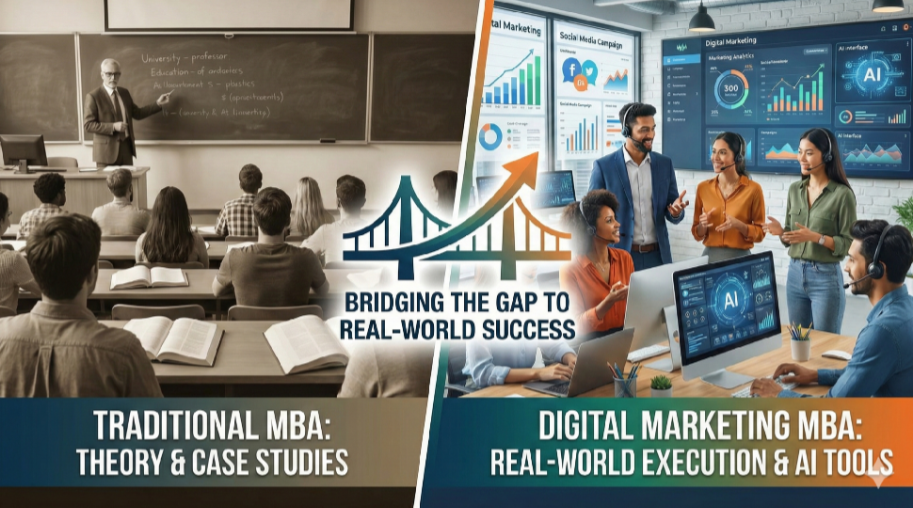
Unlike traditional MBA programs that focus heavily on theory, these specialized courses emphasize AI-driven marketing, performance analytics, budget optimization, and portfolio development.
This approach ensures graduates can handle real client briefs, manage marketing teams, and drive business growth from their first day on the job.
The Evolution of Marketing Education
Business schools have recognized that marketing has changed fundamentally. Digital channels now dominate customer acquisition and brand building. This shift has forced MBA programs to move beyond case studies and classroom discussions.
Modern digital marketing MBAs focus on execution. Students learn by doing. They run actual campaigns, work with real budgets, and analyze live data. This practical approach builds confidence and competence that employers value.
Core Components of a Digital Marketing MBA
These programs combine traditional MBA subjects with cutting-edge digital skills. The curriculum is designed for immediate application.
Strategic subjects include:
- Marketing strategy and brand management
- Consumer behavior in digital environments
- Financial management for marketing budgets
- Leadership and team management
- Business communication and presentation
Digital skills modules cover:
- SEO and AI-powered content strategy
- Google and Meta ads management
- Social media marketing and community building
- Marketing automation and CRM
- Data analytics and performance reporting
- AI tools for research and creative production
This combination creates marketers who can think strategically and execute digitally.
Practical Learning Methods
The best programs use multiple teaching methods to ensure students graduate with job-ready skills.
Live projects are central. Students work with real brands to solve marketing challenges. They build campaigns, optimize ad spend, and present results to clients. This experience is invaluable during job interviews.
Internships are built into the program. Students spend time in agencies, brand teams, or startups. They learn how marketing departments function and what skills are most valued.
Mentorship from industry leaders provides insider knowledge. Guest sessions reveal how top marketers approach strategy, handle crises, and drive growth. These interactions often lead to job referrals.
How Delhi Became a Digital Marketing MBA Hub
Delhi has emerged as a leading destination for digital marketing MBA programs. The city’s mix of corporate headquarters, media agencies, and startup ecosystems creates rich learning opportunities.
Students pursuing an MBA in digital marketing in Delhi benefit from:
- Proximity to major brand offices in Gurgaon and Noida
- Access to top advertising and digital agencies
- Guest lectures from CMOs and marketing heads
- Live projects for companies across sectors
- Strong placement networks in the NCR region
Institutes like IIDE have developed comprehensive programs that balance MBA fundamentals with deep digital expertise. Their curriculum is updated regularly to match industry trends, ensuring students learn relevant skills.
Career Outcomes and Growth
Graduates of digital marketing MBA programs enter the job market with clear advantages. They combine business acumen with digital execution skills, making them ideal for leadership roles.
Common career paths include:
- Digital Marketing Manager (6 to 12 lakhs per annum)
- Brand Manager (8 to 15 lakhs)
- Growth Marketing Head (12 to 20 lakhs)
- Performance Marketing Director (15 to 25 lakhs)
- Chief Marketing Officer (25 lakhs plus)
Salary depends on prior experience, portfolio quality, and the reputation of the institute. Those with strong internships and live project results often command premium packages.
Why This Model Works for Real-World Marketing
Traditional MBA graduates often need months of training before they can contribute effectively. Digital marketing MBA graduates hit the ground running because they have already:
- Managed marketing budgets during their projects
- Built and optimized live campaigns
- Analyzed real performance data
- Presented results to stakeholders
- Used the same tools as industry professionals
This readiness reduces training costs for employers and accelerates career growth for graduates.
Frequently Asked Questions
Is an MBA in digital marketing better than a general MBA?
For marketing careers, yes. It provides specialized skills that are in high demand. General MBAs offer broader knowledge but lack deep digital expertise that modern marketing roles require.
Do I need a marketing background to enroll?
No. These programs are designed for freshers and career switchers. They start with fundamentals and build up to advanced topics. Analytical thinking and willingness to learn matter more than prior marketing experience.
How long does it take to complete a digital marketing MBA?
Most programs run for 11 to 24 months. Some accelerated options complete in 11 months. The duration includes classroom learning, projects, and internships.