Insurance for Digital Nomads: The Complete 2026 Guide

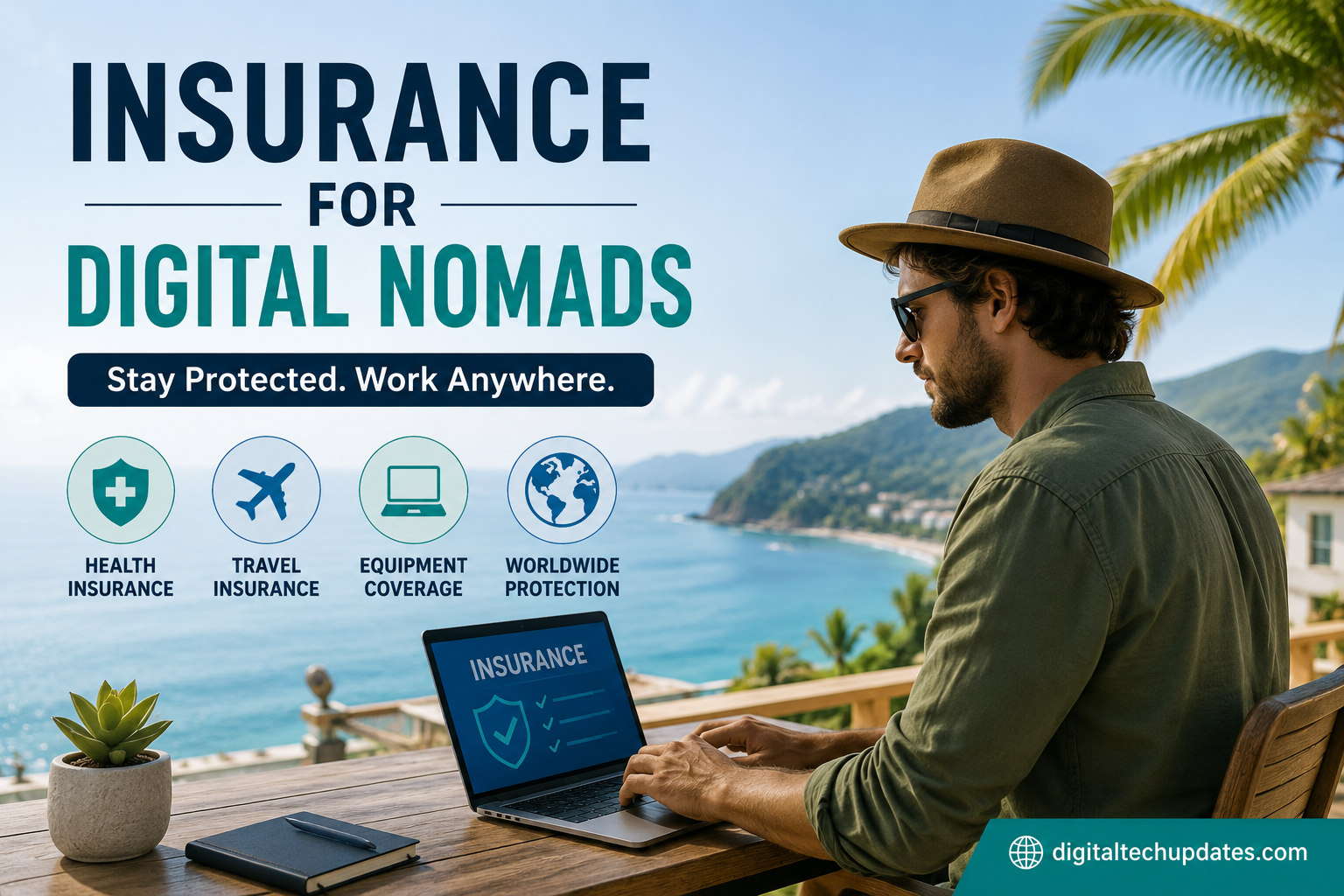
Working remotely from Bali, Lisbon, or Medellín? One medical emergency without coverage can wipe out your savings. This guide covers every type of insurance digital nomads need, the best providers, real pricing, and how to choose the right plan for your lifestyle.
Why Digital Nomads Need Insurance
The digital nomad lifestyle sounds glamorous — and it is. But crossing borders regularly, relying on expensive tech equipment, and working without a traditional employer safety net creates unique risks that standard insurance simply doesn’t cover.
Your domestic health insurance almost certainly stops working the moment you leave your home country. Your renters or home insurance won’t cover your laptop stolen from a cafe in Bangkok. And if a client sues you over a missed deadline while you’re working from a co-working space in Prague, you’re on your own.
Key Insight:
A single emergency surgery abroad can cost $30,000–$80,000 out of pocket. A good insurance plan for digital nomads costs less than $100/month — making it one of the best investments any remote worker can make.
There’s also a legal angle: many countries that offer digital nomad visas now require proof of comprehensive health insurance as part of the application. Destinations like Portugal, Costa Rica, Germany, and the UAE all have this requirement built into their nomad visa programs.
| ✓ WITH INSURANCE
✔ Emergency medical costs covered ✔ Laptop & gear theft protected ✔ Trip cancellations reimbursed ✔ Visa applications approved faster ✔ Medical evacuation included ✔ Peace of mind while working |
✗ WITHOUT INSURANCE
✗ Massive out-of-pocket medical bills ✗ Career disruption from theft ✗ No recourse for flight cancellations ✗ Nomad visa denials ✗ Stranded abroad during emergencies ✗ Financial ruin from one bad incident |
Five Types of Insurance for Digital Nomads
Digital nomad insurance isn’t one product — it’s a layered protection strategy. Here are the five core coverage types every location-independent worker should understand.
1. International Health Insurance
Long-term medical coverage for routine care, hospital stays, prescriptions, and specialist visits — valid across multiple countries. This is your most important layer of protection. Unlike travel insurance, international health insurance is designed for people living abroad for months or years at a time.
2. Travel Insurance
Covers short-term trip-related risks: flight cancellations, lost luggage, travel delays, and emergency evacuation. Best paired with health insurance for full nomad coverage. Most travel plans cap out at 30–90 days, so they work as a supplement, not a foundation.
3. Tech & Gear Insurance
Protects your laptop, camera, tablets, and other work equipment against theft, accidental damage, and liquid spills. Often sold as an add-on (can raise plan costs by 40–60%) or as a separate ‘inland marine’ policy. Essential if your gear is worth more than $2,000.
4. Personal Liability Insurance
Covers third-party injury or property damage you accidentally cause — spilling coffee on someone’s laptop at a cafe, a slip-and-fall at your Airbnb, or accidental damage to a co-working space. This is often bundled with travel plans or available as a low-cost add-on.
5. Professional Liability (Errors & Omissions)
Crucial for freelancers and remote contractors. Covers financial claims from clients due to professional errors, missed deadlines, or contract disputes while working abroad. If you work with paying clients, this is essential protection for your business.
| ⚠ Common Mistake:
Many digital nomads buy only travel insurance, which is designed for 1–4 week vacations. If you’re abroad for months, you need international health insurance as your primary coverage — travel insurance alone will leave major gaps. |
Travel Insurance vs. International Health Insurance
This is one of the most confusing distinctions in nomad insurance. Here’s the simple breakdown:
| Feature | Travel Insurance | International Health Insurance |
| Best for | Short trips (1–12 weeks) | Long-term stays (3+ months) |
| Routine checkups | ✗ Usually not covered | ✔ Included |
| Pre-existing conditions | ✗ Rarely covered | ✔ Often available (premium plans) |
| Trip cancellation | ✔ Core benefit | ✗ Typically excluded |
| Lost luggage | ✔ Included | ✗ Not included |
| Medical evacuation | ✔ Included | ✔ Included |
| Flexibility | Fixed dates, one trip | Monthly or annual, multi-country |
| Cost | $50–$200 per trip | $50–$400/month |
The ideal nomad setup combines both: a comprehensive international health plan as the foundation, with a travel insurance layer for trip-specific risks like cancellations and baggage.
Best Insurance Providers for Digital Nomads in 2026
After reviewing all major options based on coverage, price, flexibility, and real user reviews, here are the top providers for digital nomads this year.
SafetyWing Best for: Most digital nomads aged 18–69
From $62.72 / 4 weeks
SafetyWing started as a nomad-founded insurance company and remains the most popular choice in the community. Its key advantage is ultimate flexibility — you pay monthly, auto-renewals keep you covered, and you can cancel anytime. Available in 170+ countries worldwide, it’s the closest thing to a ‘global health insurance subscription.’ The Essential Plan handles emergency medical events. The Complete Plan adds routine care, mental health services, maternity, and chronic illness coverage.
Strengths:
✔ No fixed term — cancel anytime
✔ Coverage in 170+ countries
✔ Electronics theft covered ($1,000/item, $3,000/year)
✔ Adventure sports add-on available
✔ Sign up even if already traveling abroad
✔ Children under 10 covered free on parent plan
Watch out for:
⚠ Pre-existing conditions only on Complete plan
⚠ US/Canada coverage limited on Essential
⚠ Coverage limits lower than premium expat plans
World Nomads Best for: Adventure travelers & annual coverage
From $127 / month
World Nomads has been a trusted name in travel insurance since 1997. Their Annual plan is perfect for nomads who need year-round coverage across unlimited trips. They offer four plan tiers (Standard, Explorer, Epic, Annual) and stand out for broad adventure sports coverage and gear protection.
Strengths:
✔ Annual unlimited trips
✔ Strong gear & electronics protection
✔ Adventure sports included
✔ Trip cancellation & delay coverage
✔ Flexible — extend or adjust mid-trip
Watch out for:
⚠ Pricier than competitors
⚠ Max 45 days per single trip (Annual plan)
⚠ Not ideal for full-time health coverage
Genki Best for: Tech-forward nomads, Allianz-backed reliability
From ~$80 / month
Genki is backed by Allianz — one of the world’s largest insurers — giving it exceptional financial stability. The Traveler plan covers medical emergencies for up to 12 months abroad including accidents from sports and recreational activities. Known for its seamless digital experience and 24/7 support across all time zones.
Strengths:
✔ Backed by Allianz for financial strength
✔ Up to 12 months of continuous coverage
✔ Sports & recreation activities included
✔ Easy fully digital claims process
✔ 24/7 support in all time zones
Watch out for:
⚠ US/Canada limited to 7 days (base plan)
⚠ No trip cancellation coverage
⚠ No lost baggage protection
PassportCard Nomads Best for: Zero-paperwork, instant payment
Flexible plans available
PassportCard’s standout feature is their instant payment card — when a covered expense occurs, you swipe the card and the insurer pays the facility directly, eliminating reimbursement headaches. Ideal for frequent movers who want minimal admin friction.
Strengths:
✔ Instant payment card — no reimbursement wait
✔ Zero paperwork claims
✔ 24/7 multilingual support
✔ Extend or upgrade your plan anytime
Watch out for:
⚠ Fewer plan customization options
⚠ Less transparency on exact pricing upfront
From $150+ / month
Cigna Global is the premium option for nomads who want full expat-grade health coverage. With access to 1.65 million doctors and hospitals worldwide, it’s the most comprehensive health insurance solution available. Best for those planning to settle in one country for a year or more.
Strengths:
✔ 1.65 million+ provider network worldwide
✔ Full expat health coverage including routine care
✔ Pre-existing conditions (with underwriting)
✔ Mental health & maternity coverage
✔ Strong for families and older nomads
Watch out for:
⚠ Higher monthly premium
⚠ Less flexible for frequent country changes
⚠ Better for long stays than constant hopping
Full Comparison: Digital Nomad Insurance 2026
Quick reference comparing the major providers across the factors that matter most to nomads.
| Provider | Price | Emergency Medical | Routine Care | Gear Cover | Adventure | Trip Cancel |
| SafetyWing Essential | $62.72/4wk | ✔ $250K | ✗ No | ✔ $1K/item | Add-on | ✔ Yes |
| SafetyWing Complete | ~$180/mo | ✔ Comprehensive | ✔ Yes | ✔ Yes | Add-on | ✔ Yes |
| World Nomads Annual | ~$127/mo | ✔ Yes | ✗ No | ✔ Yes | ✔ Yes | ✔ Yes |
| Genki Traveler | ~$80/mo | ✔ Yes | ✗ No | ✗ No | ✔ Yes | ✗ No |
| PassportCard Nomads | Varies | ✔ Yes | ✔ Premium | ✗ No | ✔ Yes | ✔ Yes |
| Cigna Global | $150+/mo | ✔ Unlimited | ✔ Yes | ✗ No | Add-on | ✗ No |
* Prices accurate as of May 2026 for ages 18–39. Always verify current rates on provider websites.
How to Choose the Right Insurance as a Digital Nomad
With so many options available, finding the right plan comes down to honestly assessing your lifestyle, budget, and risk tolerance. Follow these six steps:
-
Step 1: Identify how long you’ll be abroad
For stays under 3 months, quality travel insurance may be enough. For 3+ months of nomadic living, you need international health insurance as your primary coverage layer.
-
Step 2: List the countries you’ll visit
Verify each provider covers your destination countries. US and Canada coverage is limited or expensive with many nomad plans. Check visa requirements that may mandate specific coverage levels.
-
Step 3: Assess your health situation
If you have pre-existing conditions, chronic illness, or need regular prescriptions, you’ll need a Complete/Premium plan. Budget plans typically exclude these.
-
Step 4: Calculate your gear value
Total up the replacement cost of your laptop, phone, camera, and other work equipment. If it exceeds $2,000, dedicated tech insurance or a plan with gear coverage is essential.
-
Step 5: Consider your work type
Freelancers working with clients may want professional liability (E&O) coverage. Remote employees may already have some coverage through their employer — check first.
A plan with a higher deductible ($250–$500) will have lower monthly premiums — ideal if you’re healthy and only need major emergency protection.
How Much Does Insurance for Digital Nomads Cost?
Nomad insurance pricing varies by age, destination, coverage level, and deductible. Here’s a realistic budget breakdown for 2026:
| Coverage Type | Budget | Mid-Range | Premium |
| Emergency health only | $50–$80/mo | $80–$150/mo | $150–$300/mo |
| Full health (inc. routine) | $130–$180/mo | $180–$280/mo | $280–$500+/mo |
| Gear & electronics | $20–$40/mo add-on | $40–$80/mo standalone | $80–$150/mo comprehensive |
| Personal liability | $10–$25/mo | $25–$60/mo | $60–$120/mo |
| Total realistic budget | $80–$150/mo | $150–$300/mo | $300–$600+/mo |
| Real Example:
A healthy 30-year-old nomad spending 90% of time outside the US could build solid coverage for around $130–$180/month — combining SafetyWing Essential ($63/4wk) plus a gear add-on and personal liability rider. That’s less than $6/day for genuine global protection. |
Seven Money-Saving Tips for Nomad Insurance
Tip 1: Pay annually when possible
Most providers offer 10–15% discounts for annual prepayment vs. monthly billing. SafetyWing offers 10% off for 364-day prepayment.
Tip 2: Exclude US coverage if not visiting
US healthcare is the world’s most expensive to cover. Excluding US/Canada can cut your premiums by 20–40%.
Tip 3: Choose a higher deductible
If you’re young and healthy, a $250–$500 deductible lowers monthly costs significantly without much real-world risk.
Tip 4: Check your credit card coverage
Premium travel cards (Amex Platinum, Chase Sapphire Reserve) often include trip cancellation and some gear coverage — avoiding plan duplication saves money.
Tip 5: Bundle with a nomad visa requirement
Some countries’ visa-approved insurers are actually more affordable than standalone plans when the visa process is considered.
Tip 6: Use co-working space deals
Co-working memberships like Remote Year or certain WeWork tiers often include group insurance discounts for members.
Tip 7: Review your home country entitlements
EU citizens retain limited EHIC/GHIC rights within the EU/EEA. Some countries allow continued domestic coverage abroad for a year or more — check before buying redundant coverage.
Frequently Asked Questions
Do digital nomads really need insurance?
Yes — 100%. Even if you’re young and healthy, a single emergency medical procedure abroad can cost $30,000 to $80,000 out of pocket. Add the risk of having a $2,000 laptop stolen, a flight cancelled, or a client filing a legal claim, and the math becomes very clear. Good nomad insurance costs less than $150/month.
What is the cheapest insurance for digital nomads?
SafetyWing Nomad Insurance (Essential Plan) is the most affordable option at approximately $62.72 per 4 weeks for travelers aged 18–39. Genki Traveler is a close alternative in a similar price range, particularly good if you want Allianz backing.
Does regular travel insurance cover digital nomads?
Not adequately. Standard travel insurance is built for 1–4 week vacations and typically caps coverage at 30–90 days. It doesn’t cover routine medical care, long-term stays, remote work equipment, or multi-country living. If you’re abroad for months at a time, international health insurance must be your foundation.
Can I get nomad insurance if I’m already abroad?
Yes — SafetyWing specifically allows you to sign up even if you’re already traveling outside your home country, which is a major advantage. Most standard insurance providers require you to purchase coverage before departing. Always read the terms, as there’s usually a 2–3 day waiting period before coverage activates for new sign-ups already abroad.
Is nomad insurance required for digital nomad visas?
Many digital nomad visa programs require proof of health insurance as part of the application. Countries like Portugal, Costa Rica, Barbados, Germany, and the UAE have this requirement. The coverage minimums vary by country — typically €30,000–€50,000 in medical coverage. SafetyWing and World Nomads are commonly accepted.
What insurance do I need to protect my laptop?
You have three options: (1) Choose a plan with electronics coverage built in, like SafetyWing which covers up to $1,000 per stolen item and $3,000 yearly. (2) Add a gear rider to your existing plan. (3) Purchase a dedicated tech insurance policy for full ‘all risks’ coverage including accidental damage and liquid spills.
Can I use my home country’s health insurance abroad?
Generally no, or very limited. US health insurance typically does not cover international care except for genuine emergencies. EU citizens have EHIC/GHIC rights within the EU/EEA but this doesn’t cover full medical care in non-EU countries. Once you’ve been abroad for 6–12 months, your home coverage may lapse entirely.
What’s the best insurance for a digital nomad family?
For families, Cigna Global and SafetyWing Complete both offer family plans. SafetyWing notably covers children under 10 for free on a parent’s policy. For families with specific health needs, Cigna Global’s extensive network (1.65M+ providers) and comprehensive coverage including maternity and pediatric care is often the better fit.

Thalla Lokesh
Thalla Lokesh is a Digital Marketing Strategist and SEO Specialist with over 12 years of experience in helping businesses grow their online presence. Since beginning his career in 2013, he has successfully worked across industries including healthcare, education, technology, and e-commerce. He specializes in search engine optimization (SEO), content marketing, keyword strategy, and link building, with a strong focus on delivering measurable results. Lokesh has helped brands achieve top rankings on Google through data-driven strategies, high-quality content, and ethical SEO practices aligned with search engine guidelines. As the founder of Honey Web Solutions , a Tirupati-based digital marketing company, he actively works with clients to improve organic traffic, lead generation, and online visibility. He also contributes expert insights on digital marketing trends, AI SEO, and content strategies through blogs and industry platforms.