How Automated Trip Logging Simplifies Business Travel and Expense Reporting

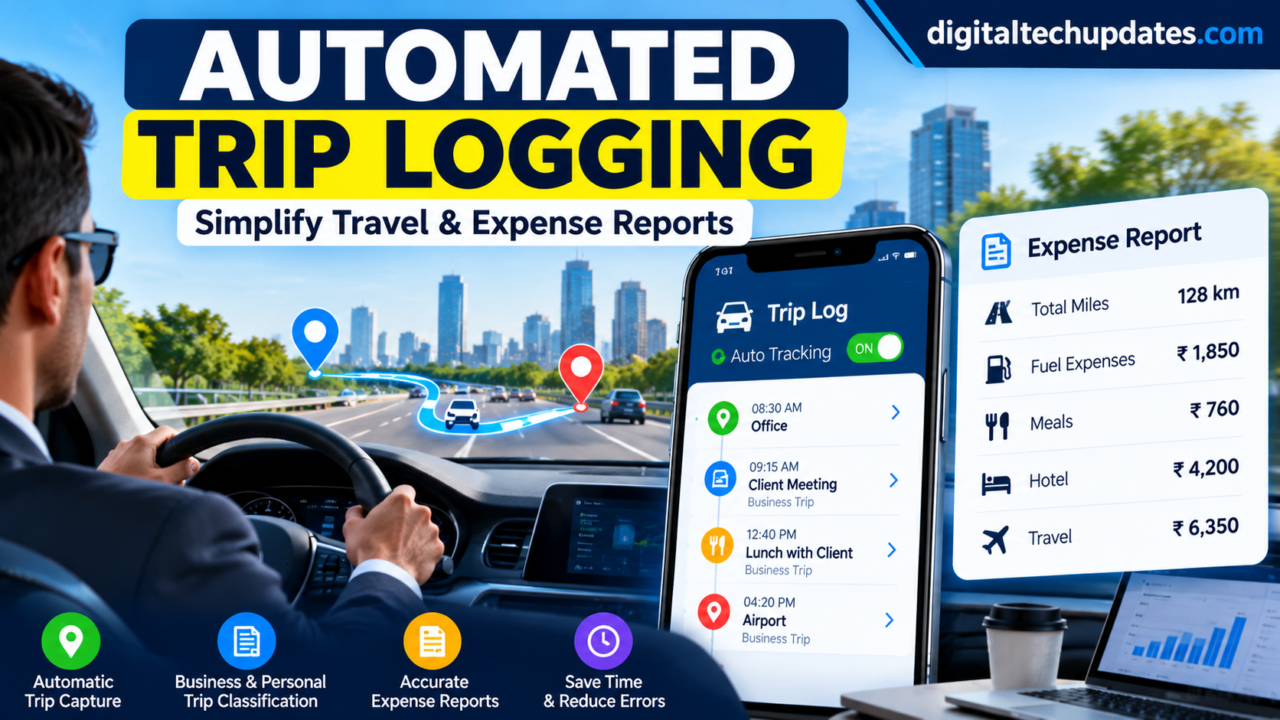
A sales representative finishes a two-day client run with six stops. They have a refueling receipt and a vague idea of which detour was for work. Back at the office, the finance team receives an expense claim. It is built from calendar entries and rough distance estimates.
Automated trip logging replaces that reconstruction exercise with a record created during the journey. This gives both the employee and reviewer firmer ground for reimbursement.
The appeal isn’t limited to saving a few minutes. Basically, travel records affect –
- Payroll
- Tax documentation
- Client billing
- Budget forecasts
- Internal controls.
If the underlying journey data is patchy, each later calculation inherits the doubt.
Manual Logs Create More Work Than They Show
At the outset, a handwritten log or monthly spreadsheet looks inexpensive. This is because its hidden costs sit elsewhere –
- Employees postpone entries
- Managers question unusual distances
- Finance staff compare claims against receipts or meeting schedules.
In fact, one doubtful trip may trigger three emails and a revised report.
Memory Is Also Selective
A driver may remember the 80-mile client visit. They might still forget the four-mile trip to collect project materials. Over a quarter, those omissions distort both reimbursements and departmental spending.
This is where a well-configured mileage tracker captures travel distance and timing. It does not rely a lot on memory. It lets the employee classify each journey as business or personal. Automation should produce a credible draft. It must not make policy decisions without human input.
What Changes in the Expense Workflow
Automated trip logging shifts record creation. It moves from month-end to the moment of travel. The following are the differences between the manual and the automated approaches:
| Process point | Manual approach | Automated approach |
| Journey capture | Driver records the trip later | Trip details are recorded during travel |
| Business purpose | Often recalled from memory | Added while the context is still fresh |
| Distance review | Checked against maps or estimates | Route data provides a starting record |
| Report preparation | Entries are copied into a claim | Approved trips can be grouped for reporting |
| Manager review | Missing context prompts follow-up | Exceptions receive most of the attention |
This doesn’t remove review. But it changes what reviewers spend time on. Instead of scrutinizing every line equally, they can focus on –
- Duplicate trips
- Unusual distances
- Missing purposes
- Journeys outside expected working patterns.
Better Records Still Need Sensible Controls
Businesses need to decide what to automate first. They must focus on capture, categorization, and report preparation. They must also make sure approval and dispute handling remain human.
Usually, a workable policy covers the following practical points:
- Define which journeys qualify for reimbursement. These include travel between temporary work locations.
- Require a short business purpose. Another person must understand that purpose six months later.
- Set submission and approval deadlines. This helps prevent claims from accumulating indefinitely.
- Explain how employees can edit a route, delete a personal trip, or challenge an incorrect classification.
- Limit access to travel information based on job needs and retain records only as long as required.
What About Privacy?
Continuous location collection may feel disproportionate. This is true for employees who use personal vehicles or work outside regular hours. For instance, a company might –
- Restrict capture to selected periods
- Permit manual activation
- Collect only what its expense process genuinely needs.
However, there’s a cost trade-off too. In fact, a small business might have two drivers and a handful of monthly journeys. They may find a disciplined spreadsheet perfectly adequate.
Automated trip logging becomes more persuasive as –
- Travel volume rises
- Claims cross several approval layers
- Mileage is charged back to clients.
Cleaner Data Helps Beyond Reimbursement
Trip records can reveal operational quirks that expense totals hide. Perhaps technicians repeatedly return to the same supplier, or client visits are being scheduled in an order that adds avoidable distance. The answer isn’t automatic route surveillance; it may simply be a better stock policy or a less awkward appointment calendar.
Finance teams also gain a steadier reporting trail. They don’t receive a month-end bundle assembled from memory. Instead, they get records tied to –
- Dates
- Routes
- Purposes
- Approval status.
That makes exceptions easier to explain and reduces budget reliance on late claims.
Reliable Trip Records Reduce Business Friction
Automated trip logging works best as a recordkeeping aid. It does not work as an unquestioned authority. Basically, it does the following:
- Captures journeys before details fade
- Reduces repetitive entry
- Directs reviewers toward the claims that deserve a closer look.
Still, weak policy can spoil good data. Businesses need clear reimbursement rules and privacy controls that match the risk. It requires a way to correct mistakes.
With those pieces in place, automated trip logging changes travel reporting. It is no longer a monthly guessing exercise. Instead, it becomes a more defensible business process.

Thalla Lokesh
Thalla Lokesh is a Digital Marketing Strategist and SEO Specialist with over 12 years of experience in helping businesses grow their online presence. Since beginning his career in 2013, he has successfully worked across industries including healthcare, education, technology, and e-commerce. He specializes in search engine optimization (SEO), content marketing, keyword strategy, and link building, with a strong focus on delivering measurable results. Lokesh has helped brands achieve top rankings on Google through data-driven strategies, high-quality content, and ethical SEO practices aligned with search engine guidelines. As the founder of Honey Web Solutions , a Tirupati-based digital marketing company, he actively works with clients to improve organic traffic, lead generation, and online visibility. He also contributes expert insights on digital marketing trends, AI SEO, and content strategies through blogs and industry platforms.