Health Insurance for Self-Employed in India 2026: The Complete Guide for Freelancers and Entrepreneurs

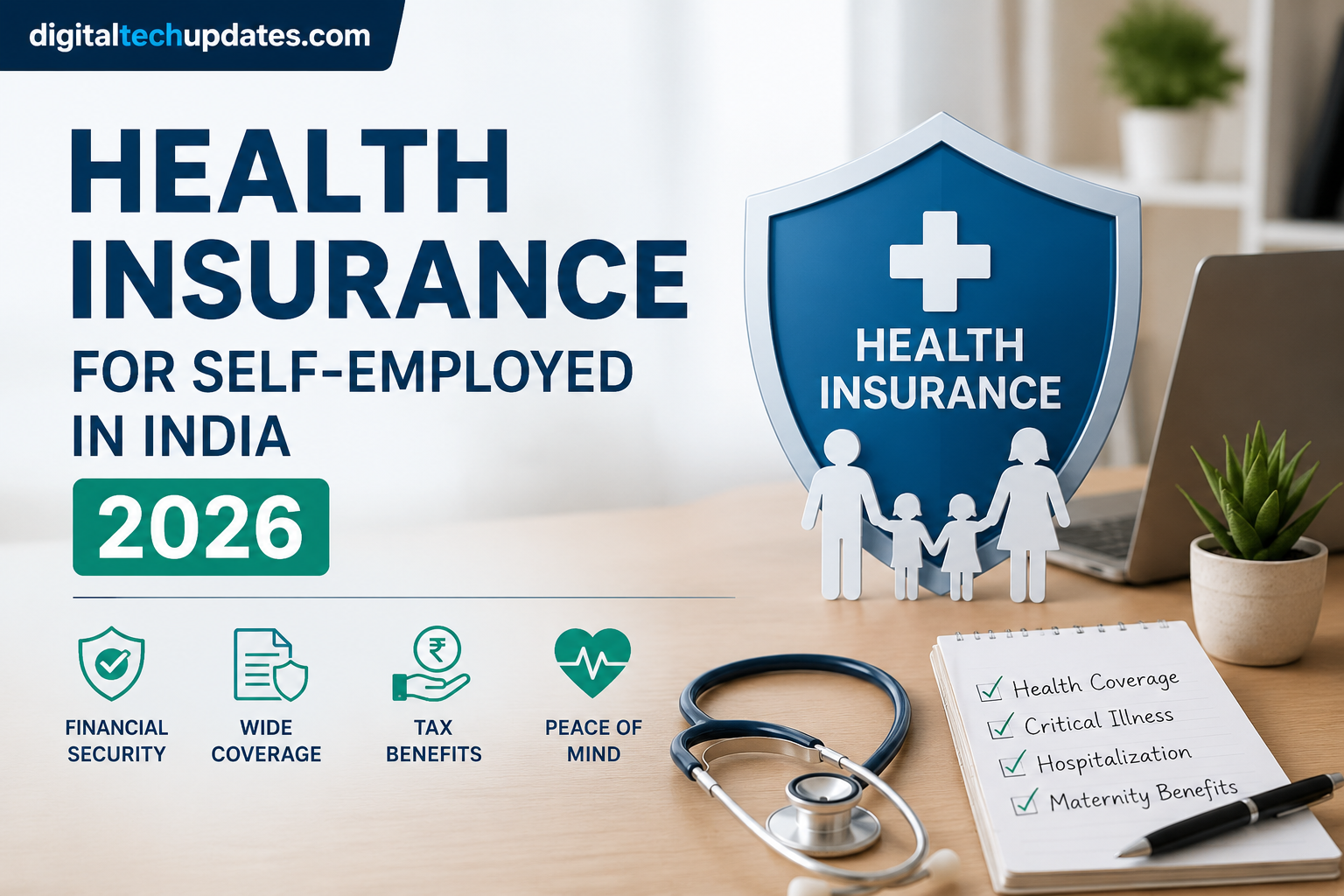
Here is an uncomfortable truth that most financial advisors skip over: if you are self-employed in India, you have absolutely no health insurance safety net unless you build one yourself.
Salaried employees get employer-sponsored group health insurance automatically. Self-employed professionals — freelancers, consultants, small business owners, gig workers, and entrepreneurs — get nothing.
One hospitalisation without coverage can wipe out months of savings. According to market research, healthcare costs in India are rising at 14% annually, significantly outpacing general inflation. A single heart surgery today costs ₹3 to ₹8 lakh. A cancer treatment can run ₹15 to ₹30 lakh.
If you are self-employed, health insurance is not optional. It is mission-critical.
This guide tells you exactly how to choose the right health insurance policy as a self-employed Indian, what features to prioritise, and which plans offer the best value in 2026.
Why Self-Employed People Face a Unique Insurance Challenge
When you are salaried, your employer handles insurance admin — you are simply added to a group policy. When you are self-employed, you must:
- Research and compare plans yourself
- Negotiate as an individual, not a group
- Bear 100% of the premium cost
- Handle renewals and claims entirely on your own
The good news is that the individual health insurance market in India has matured significantly. IRDAI (Insurance Regulatory and Development Authority of India) now mandates standardised policies, improved claim processes, and portability rights — meaning you can switch insurers without losing benefits.
What Kind of Coverage Do You Actually Need?
Before looking at specific plans, understand the type of coverage that makes sense for you.
Individual Health Plan: Covers only you. Best if you are single, have no dependents, or want the most affordable option.
Family Floater Plan: A single policy covers you, your spouse, and children under one sum insured. Cost-effective for families — but remember the sum insured is shared, so choose a higher amount.
Critical Illness Plan: Pays a lump sum on diagnosis of serious conditions like cancer, heart attack, or kidney failure. Ideal as a top-up alongside a base health policy.
Super Top-Up Plan: Kicks in after your base policy sum is exhausted. Very affordable way to boost your total coverage significantly.
7 Best Health Insurance Plans for Self-Employed in India 2026
1. Niva Bupa Reassure 2.0
- Sum Insured: ₹3 lakh to ₹1 crore
- Unique Feature: “Booster Benefit” — unused sum insured rolls over to the next year, doubling or tripling over time
- Network Hospitals: 10,000+
- Best For: Freelancers who want growing coverage without paying higher premiums
2. Star Health Comprehensive Insurance
- Sum Insured: ₹5 lakh to ₹1 crore
- Unique Feature: In-patient, day care, and OPD (outpatient) coverage — rare in standard policies
- Network Hospitals: 14,000+
- Best For: Self-employed professionals who visit doctors frequently or manage chronic conditions
3. Care Supreme (formerly Religare)
- Sum Insured: ₹5 lakh to ₹6 crore
- Unique Feature: Unlimited automatic recharge of sum insured during the policy year
- Network Hospitals: 21,000+
- Best For: Entrepreneurs in high-risk professions or those with family history of serious illness
4. HDFC ERGO Optima Secure
- Sum Insured: ₹5 lakh to ₹2 crore
- Unique Feature: “Secure Benefit” — 2x the base coverage from day one at no extra cost
- Network Hospitals: 13,000+
- Best For: Business owners wanting high coverage with a reputed insurer
5. Aditya Birla Activ One Max
- Sum Insured: ₹2 lakh to ₹6 crore
- Unique Feature: Up to 100% premium refund for staying healthy (HealthReturns reward system)
- Network Hospitals: 12,000+
- Best For: Health-conscious self-employed professionals who want rewards for wellness
6. ICICI Lombard Complete Health Insurance
- Sum Insured: ₹3 lakh to ₹50 lakh
- Unique Feature: iHealth app integration, telemedicine consultations included
- Network Hospitals: 15,000+
- Best For: Tech-savvy freelancers and digital professionals
7. ManipalCigna ProHealth Plus
- Sum Insured: ₹2.5 lakh to ₹25 lakh
- Unique Feature: Global coverage option — ideal for freelancers who travel internationally
- Network Hospitals: 8,500+
- Best For: Consultants and remote workers with international clients
Key Features to Compare When Choosing a Plan
Waiting Period: Most policies have a 2 to 4-year waiting period for pre-existing diseases. If you already have diabetes, hypertension, or thyroid issues, choose plans with the shortest waiting periods (some offer 1-year waiting periods for PEDs).
Room Rent Limit: Some policies cap your daily room rent at ₹5,000 or a percentage of the sum insured. This single clause can make a massive difference in your final out-of-pocket cost. Always choose a plan with no room rent capping.
Co-payment Clause: Some plans require you to pay 10–20% of every claim from your pocket. Avoid policies with co-payment for regular treatment unless the premium discount is very significant.
Network Hospitals: Make sure your preferred local hospital is in the insurer’s cashless network. Cashless treatment means zero out-of-pocket payment at the time of hospitalisation — you settle directly with the insurer.
Restoration Benefit: If you use up your sum insured mid-year on one illness, the restoration benefit tops it back up for the rest of the year. This is essential for individuals as there is no group pool to fall back on.
How Much Should You Spend on Health Insurance?
A common rule of thumb: spend 2 to 3% of your annual income on health insurance premiums. For someone earning ₹10 lakh annually, that is ₹20,000 to ₹30,000 per year — equivalent to a comprehensive ₹10–20 lakh family floater plan from a top insurer.
If budget is tight, start with a ₹5 lakh individual plan and add a ₹25–50 lakh super top-up plan. This combination gives you excellent protection at a significantly lower cost than a single high-value policy.
Tax Benefits for Self-Employed Policyholders
Self-employed individuals can claim deductions on health insurance premiums under Section 80D of the Income Tax Act (now Section 126 under the 2025 Act) under the old tax regime:
- Up to ₹25,000 for premiums paid for self, spouse, and dependent children
- Additional ₹25,000 for premiums paid for parents (or ₹50,000 if parents are senior citizens)
So if you are covering your own family plus your parents, total 80D deduction can be as high as ₹75,000 per year.
The One Mistake Self-Employed Professionals Make Most
The most common mistake is assuming you do not need health insurance because you are “healthy right now.” Health events are by definition unexpected — that is why insurance exists.
Many self-employed professionals delay buying health insurance until their 40s, when they suddenly face pre-existing condition waiting periods, higher premiums, and the real risk of being denied full coverage. Buying in your 20s or 30s locks in lower premiums for life and ensures you are covered from day one.
Your business is your income. Your health is your business. Protect both.

Thalla Lokesh
Thalla Lokesh is a Digital Marketing Strategist and SEO Specialist with over 12 years of experience in helping businesses grow their online presence. Since beginning his career in 2013, he has successfully worked across industries including healthcare, education, technology, and e-commerce. He specializes in search engine optimization (SEO), content marketing, keyword strategy, and link building, with a strong focus on delivering measurable results. Lokesh has helped brands achieve top rankings on Google through data-driven strategies, high-quality content, and ethical SEO practices aligned with search engine guidelines. As the founder of Honey Web Solutions , a Tirupati-based digital marketing company, he actively works with clients to improve organic traffic, lead generation, and online visibility. He also contributes expert insights on digital marketing trends, AI SEO, and content strategies through blogs and industry platforms.