
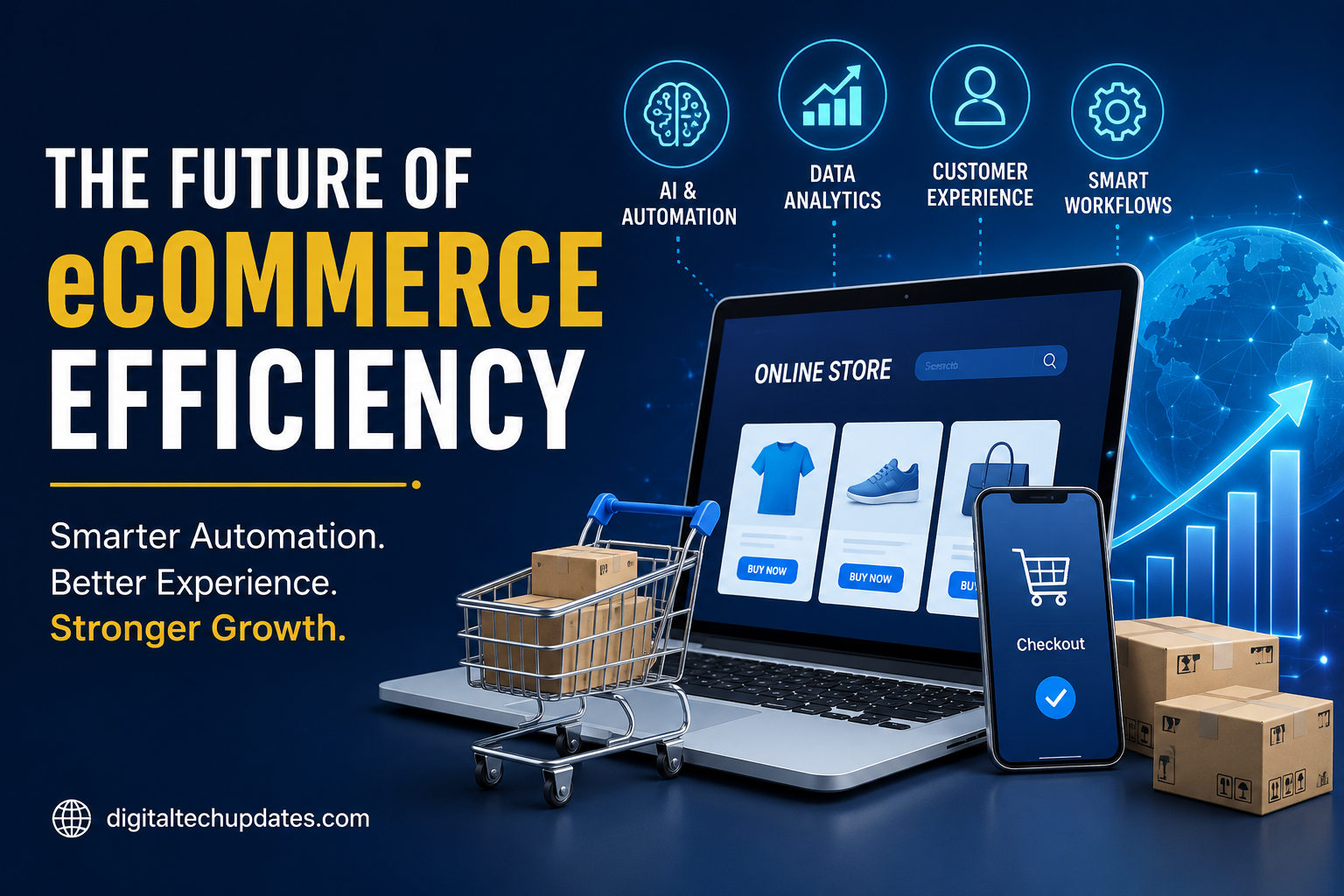
As digital commerce continues to scale across global markets, one operational factor is quietly determining which businesses grow efficiently and which struggle with fragmentation: inventory accuracy. With brands now selling across multiple storefronts, marketplaces, and regions simultaneously, the need for real-time data consistency has become a core technical requirement rather than a backend luxury.
Modern ecommerce infrastructure is increasingly shaped by automation, APIs, and cloud-based systems that reduce manual workload while improving operational visibility. As highlighted by the shift toward AI-driven supply chains discussed in Forbes, businesses that embrace system-level integration are outperforming those still relying on siloed tools.
One of the most important enablers of this transformation is real-time synchronization between sales channels and inventory systems. This is where tools like Shopify inventory sync solutions are playing a critical role in helping merchants unify stock data across multiple stores, reducing friction in multi-channel operations and preventing costly overselling errors.
Why Inventory Synchronisation Has Become a Technical Priority
In traditional retail systems, inventory updates were batch-processed at scheduled intervals. However, in modern ecommerce environments, this approach introduces significant lag and inconsistency across platforms.
Today’s consumers expect real-time product availability. Any delay in stock updates can result in failed checkouts, cancelled orders, or damaged brand trust. This expectation has forced businesses to rethink their backend architecture, prioritising systems that support continuous data synchronisation.
According to reporting from BBC News, digital transformation across retail sectors is accelerating as companies invest in automation technologies to meet rising consumer expectations for speed and accuracy.
The Technical Challenges of Multi-Channel Inventory Management
As ecommerce businesses expand, they often operate across multiple platforms such as Shopify stores, wholesale portals, and marketplace integrations. While this diversification increases revenue potential, it also introduces significant technical complexity.
Key challenges include:
- Data latency between systems
- Conflicting stock updates across platforms
- Manual reconciliation of inventory discrepancies
- API limitations between third-party tools
- Scalability issues during peak sales periods
Without a unified system, inventory data becomes fragmented, leading to inconsistent customer experiences and operational inefficiencies.
How Real-Time Sync Systems Improve Operational Efficiency
Real-time inventory synchronisation solves one of the most persistent challenges in ecommerce: data fragmentation. By ensuring that every sales channel reflects the same stock levels instantly, businesses can operate with significantly higher accuracy and confidence.
Core Benefits of Real-Time Synchronisation
- Eliminates overselling across multiple stores
- Reduces manual inventory management workload
- Improves fulfilment speed and accuracy
- Enhances customer experience through reliable stock visibility
- Supports scalable multi-store expansion
- Minimises operational errors caused by delayed updates
These improvements are particularly valuable for fast-growing ecommerce brands that operate in highly competitive digital markets.
Comparative View: Manual vs Real-Time Inventory Systems
| Feature | Manual Inventory Management | Real-Time Sync Systems |
| Update Speed | Delayed (batch-based) | Instant |
| Error Rate | High due to manual input | Low with automation |
| Scalability | Limited | High |
| Operational Visibility | Fragmented | Unified |
| Multi-store Management | Complex and inefficient | Streamlined |
This comparison highlights why real-time infrastructure is rapidly becoming the default standard for serious ecommerce operators.
The Role of APIs and Cloud Infrastructure in Inventory Sync
Modern inventory synchronisation relies heavily on APIs and cloud-based infrastructure. These technologies allow different ecommerce systems to communicate seamlessly, ensuring that updates to stock levels, orders, and product listings are reflected instantly across all connected platforms.
Cloud-native architecture also improves system resilience, allowing businesses to handle high traffic volumes without compromising data integrity. This is especially important during peak shopping events such as seasonal sales or global promotional campaigns.
As noted in Business Insider, companies investing in automation and cloud integration are gaining a measurable advantage in operational speed and supply chain reliability.
Why Shopify Merchants Are Driving Demand for Sync Solutions
Shopify has become one of the most widely used ecommerce platforms globally due to its flexibility and ecosystem of integrations. However, as merchants scale into multi-store or international operations, maintaining accurate inventory across all stores becomes increasingly complex.
This is where real-time sync tools become essential, especially for brands managing:
- Multiple Shopify storefronts
- Dropshipping partnerships
- Wholesale and retail combinations
- Regional storefront segmentation
- High-volume SKU catalogues
Without synchronised systems, even small discrepancies can result in significant financial and operational losses.
The Growing Importance of Data Accuracy in Ecommerce Systems
Inventory data is no longer just an operational metric—it is a strategic asset. Accurate inventory information directly impacts pricing strategies, demand forecasting, and customer retention.
Why Data Accuracy Matters
- Improves forecasting models for demand planning
- Reduces excess inventory holding costs
- Enhances marketing campaign precision
- Enables better supplier coordination
- Supports dynamic pricing strategies
Businesses increasingly rely on real-time data pipelines to ensure decisions are based on current and reliable information rather than outdated snapshots.
Future Trends in Inventory Synchronisation Technology
As ecommerce continues to evolve, inventory systems are expected to become even more intelligent and autonomous. Several emerging trends are shaping the next generation of inventory management technology:
- AI-powered demand forecasting systems
- Automated restocking triggers based on sales velocity
- Cross-platform inventory orchestration engines
- Predictive analytics for supply chain optimisation
- Deeper integration between ERP and ecommerce platforms
These advancements reflect a broader shift toward fully connected digital commerce ecosystems, where inventory is no longer managed in isolation but as part of a unified operational network.
According to NYTimes Technology, AI-driven supply chain systems are becoming increasingly central to how global retailers manage efficiency, cost control, and customer satisfaction in real time.
The Shift Toward Integrated Ecommerce Infrastructure
The evolution of ecommerce infrastructure is moving toward full integration, where inventory systems, sales channels, and logistics platforms operate in continuous synchronisation. This shift is redefining how digital businesses scale, allowing them to expand into new markets without the traditional operational bottlenecks of manual inventory control.
As ecommerce competition intensifies, the ability to maintain real-time visibility across all inventory points is becoming a defining factor in long-term business performance and resilience.