UPI Safety Tips for 2026: How to Avoid Digital Payment Scams

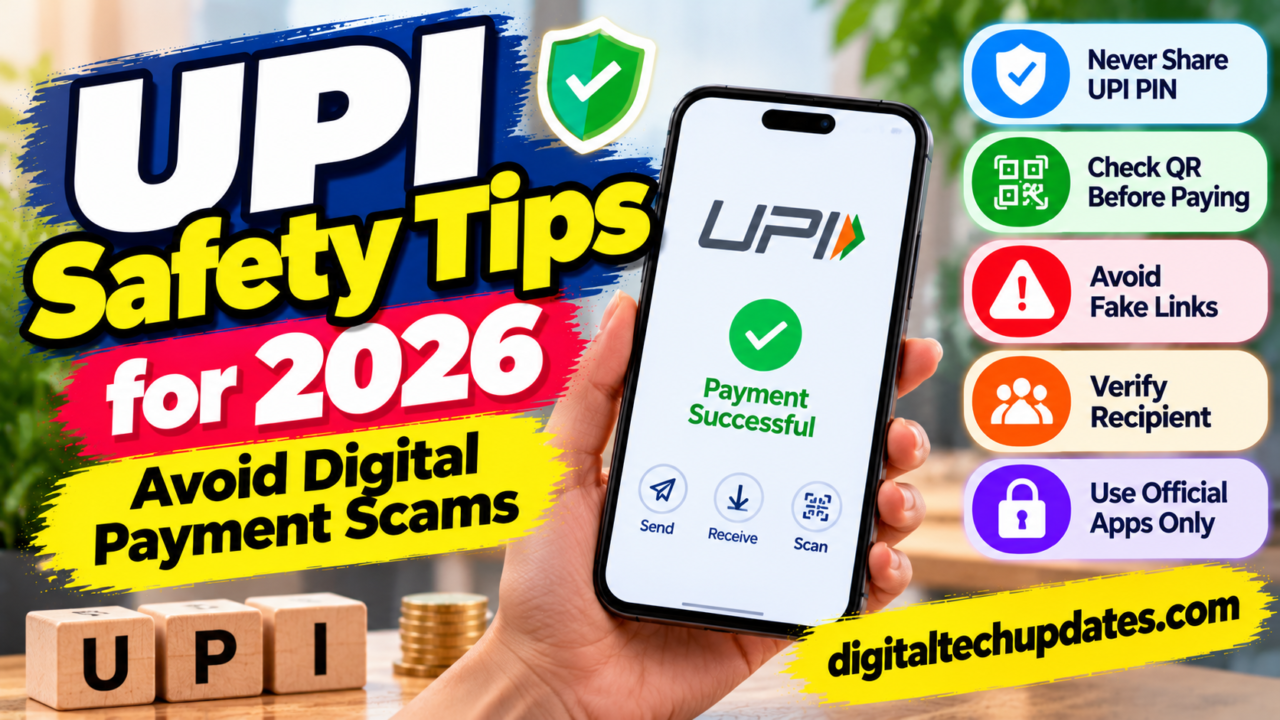
UPI has made digital payments convenient for shopping, bill payments, money transfers, and everyday purchases. But scammers also use fake payment requests, impersonation, phishing links, and misleading messages to trick users into losing money.
Whether you use UPI through a bank app or another supported payment application, understanding a few basic safety rules can help you make payments more confidently.
1. Remember That Receiving Money Does Not Require Your UPI PIN
One of the most important rules is simple: you generally do not need to enter your UPI PIN just to receive money.
Your PIN is used to authorize transactions such as sending money or approving certain payment actions. If someone tells you to enter your PIN to receive a refund, prize, or payment, stop and verify the request.
Never share your UPI PIN with anyone.
2. Check the Recipient Before Paying
Before approving a transaction, carefully check the recipient details displayed in your payment app.
Scammers may use similar names, misleading payment descriptions, or QR codes that direct money to an unintended recipient. If you are paying a shop or individual, confirm the recipient through a trusted channel when necessary.
Do not approve a payment simply because someone is rushing you.
3. Be Careful With QR Codes
QR codes can make payments quick, but a code should not be trusted just because it looks professional or comes with a familiar logo.
Before confirming a scan-and-pay transaction, check the recipient name and amount shown in the app. Avoid scanning unexpected QR codes sent by strangers or displayed in suspicious messages.
A QR code is a way to initiate an action, not proof that the person requesting payment is genuine.
A genuine bank or payment support representative should not ask you to reveal your confidential UPI PIN or one-time password.
Fraudsters may pretend to be bank staff, customer support agents, delivery workers, or government officials. They may claim that your account will be blocked unless you share a code.
End suspicious calls and contact the organization using its official app or verified contact details.
5. Avoid Unknown Payment Links
Messages promising rewards, refunds, cashback, or urgent account verification may contain fraudulent links.
Do not enter banking credentials or payment details on websites reached through unexpected messages. Instead, open the official bank or payment app directly and check whether the offer or issue is genuine.
Be cautious even when a message appears to come from someone you know, because accounts can be compromised.
6. Verify Refunds and Collect Requests
Scammers may send payment requests while claiming they are issuing a refund or transferring money to you.
Read the request carefully before approving it. If it asks you to authorize a payment, you may be sending money rather than receiving it.
For a genuine refund, check the relevant merchant or service’s official refund process.
7. Use Only Official Apps and Keep Them Updated
Install payment applications from trusted official app stores or the provider’s verified website. Keep your phone’s operating system and payment apps updated.
Avoid installing unknown APK files or granting unnecessary permissions to unfamiliar applications. Never install a remote-access app at the request of an unexpected caller who claims to be helping with a payment issue.
8. Secure Your Phone and Bank Account
Use a screen lock and keep your device with you during payment activities. Avoid sharing your phone while a payment app is open.
Enable transaction notifications and review your bank account activity regularly. If your phone is lost or you suspect unauthorized access, contact your bank and mobile operator promptly using official channels.
9. Avoid Publicity Around Sensitive Payment Details
Do not post screenshots that reveal account information, transaction references, phone numbers, or other sensitive details.
When you need to share a payment screenshot for a legitimate reason, hide information that the recipient does not need. Keep your UPI PIN, passwords, and verification codes private.
10. Act Quickly If You Suspect Fraud
If you notice an unauthorized payment or believe you have been scammed:
- Contact your bank or payment provider immediately through official channels.
- Report the transaction and follow the provider’s instructions.
- In India, call 1930 as soon as possible to report suspected cyber financial fraud.
- Submit a complaint through the official National Cyber Crime Reporting Portal at cybercrime.gov.in.
- Preserve transaction details, messages, phone numbers, and other evidence.
Reporting quickly may help authorities and financial institutions respond, but recovery is not guaranteed.
A Simple UPI Safety Checklist
Before confirming a payment, ask yourself:
- Is the recipient correct?
- Am I sending money or approving a request?
- Is anyone asking for my PIN or OTP?
- Did I open a link from an unexpected message?
- Does the payment amount match what I intended to pay?
If something seems suspicious, stop and verify it before proceeding.
Conclusion
UPI is a convenient way to pay, but safe usage depends on careful decisions. Never share your PIN or OTP, verify the recipient, treat unexpected payment requests with caution, and report suspected fraud quickly.
A few seconds spent checking a transaction can help you avoid costly mistakes and protect your digital payments in 2026.
Safety note: Use your bank’s official support channels for account-specific instructions. For suspected cyber financial fraud in India, report it promptly through the official channels listed above.

Thalla Lokesh
Thalla Lokesh is a Digital Marketing Strategist and SEO Specialist with over 12 years of experience in helping businesses grow their online presence. Since beginning his career in 2013, he has successfully worked across industries including healthcare, education, technology, and e-commerce. He specializes in search engine optimization (SEO), content marketing, keyword strategy, and link building, with a strong focus on delivering measurable results. Lokesh has helped brands achieve top rankings on Google through data-driven strategies, high-quality content, and ethical SEO practices aligned with search engine guidelines. As the founder of Honey Web Solutions , a Tirupati-based digital marketing company, he actively works with clients to improve organic traffic, lead generation, and online visibility. He also contributes expert insights on digital marketing trends, AI SEO, and content strategies through blogs and industry platforms.