Best IoT Devices for Home Automation in 2026: Build Your Smart Home Without Going Broke

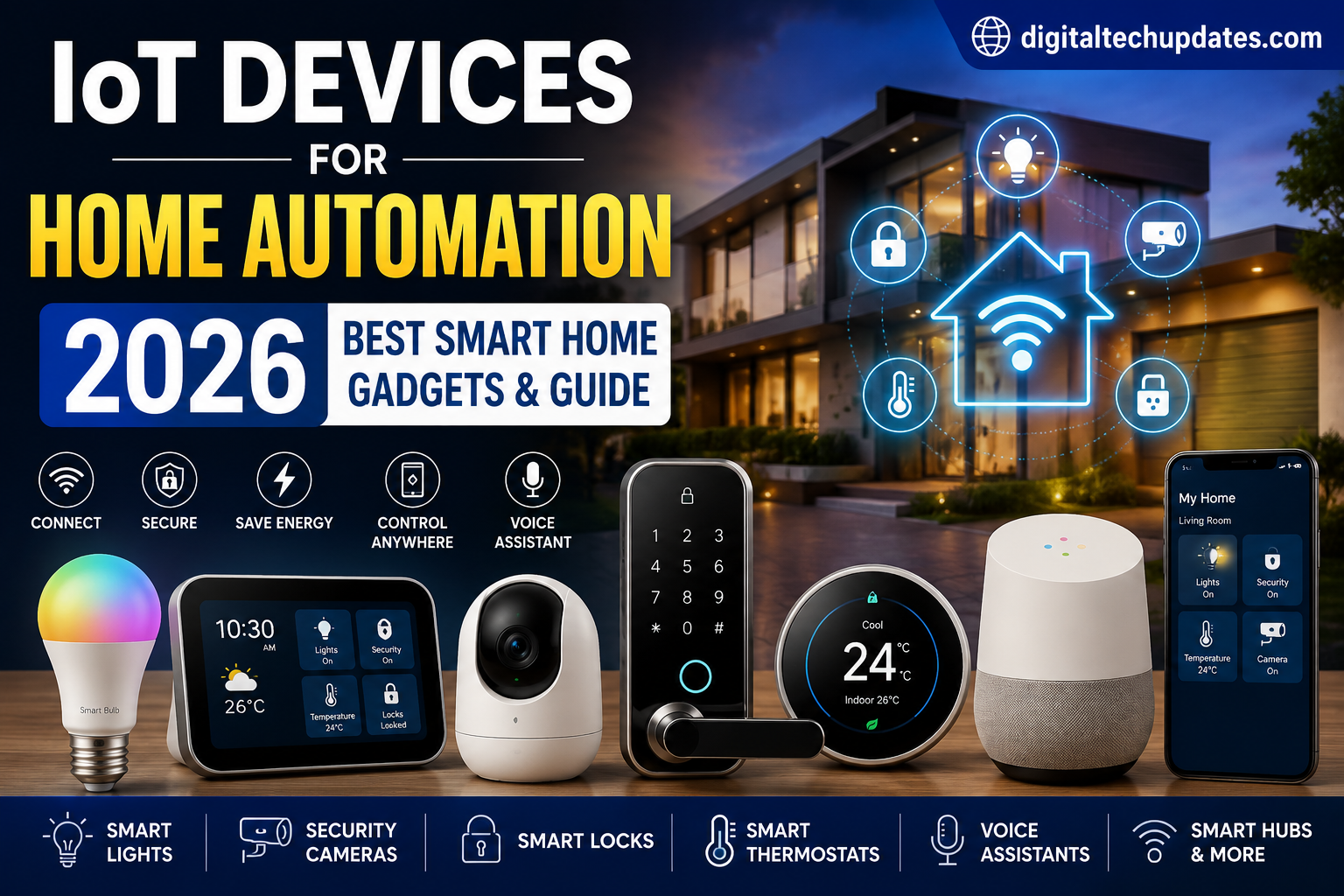
The smart home of 2026 is no longer something you see only in tech exhibitions or expensive luxury apartments. It is in millions of middle-class homes across India — dimmer lights controlled by voice, security cameras monitored from your phone, air conditioners that learn your preferences, and door locks that open with your fingerprint.
Internet of Things (IoT) devices have become genuinely affordable, remarkably easy to set up, and surprisingly reliable. And once you experience the convenience of a well-connected home, going back to manual switches and standalone appliances feels genuinely primitive.
This guide covers the best IoT devices for home automation in 2026, organised by room and function — with real recommendations for Indian consumers at different price points.
What is Home Automation and Why Should You Care?
Home automation means connecting your home’s appliances, lights, locks, sensors, and systems to the internet — allowing you to control them remotely from your smartphone, automate them on schedules, or trigger them based on conditions (like turning on lights automatically when you arrive home).
The practical benefits are real and meaningful:
- Energy savings: Smart ACs and geysers reduce electricity bills by 15–30% by running only when needed
- Security: Real-time alerts from cameras and door sensors, even when you are travelling
- Convenience: Wake up to lights that gradually brighten, coffee that starts automatically, and a morning routine that runs itself
- Accessibility: Voice control makes home management easier for elderly family members
The Foundation: Smart Home Hubs and Ecosystems
Before buying individual smart devices, decide which ecosystem you want to build around. The three major platforms are:
Amazon Alexa: The most popular voice assistant in India for smart home control. Works with the widest range of Indian smart devices.
Google Home / Google Assistant: Excellent for Android users deeply integrated into Google’s ecosystem (Gmail, Calendar, Maps). Natural language understanding is generally superior to Alexa.
Apple HomeKit: Best for iPhone users wanting the tightest security and privacy. Fewer compatible Indian devices, but premium quality.
For most Indian homes: Amazon Echo + Alexa is the most practical choice given device compatibility and price.
Room-by-Room Smart Home Recommendations for India 2026
Living Room
Smart Speaker / Display: Amazon Echo Pop (₹2,499) or Echo Show 8 (₹9,999) The Echo Pop is the most affordable entry point into Alexa-controlled home automation. The Echo Show 8 adds a screen for video calls, news briefings, and visual smart home controls — worth the extra cost for the living room.
Smart TV Stick: Amazon Fire TV Stick 4K (₹6,499) Converts any HDMI TV into a smart TV with voice control, streaming apps, and Alexa integration.
Smart Plug: Amazon Smart Plug (₹1,999) or TP-Link Tapo P110 (₹1,599) Converts any regular appliance into a smart device. Plug your floor lamp or AC into a smart plug and control it by voice or schedule. The TP-Link P110 also monitors energy usage — invaluable for tracking which appliances are electricity hogs.
Bedroom
Smart LED Bulb: Philips Wiz Smart Bulb (₹599–₹899 per bulb) 16 million colours, dimming, warm-to-cool white temperature control, voice control via Alexa and Google. Schedule them to gently brighten at your wake time instead of a jarring alarm.
Smart AC Controller: Cielo Breez Plus (₹5,499) or Sensibo Sky (₹6,999) Turns your existing split AC into a smart AC. Control from anywhere, set schedules, and enable geofencing (AC turns on automatically when you are 500 metres from home). Typically saves 20–30% on electricity.
Smart Door Lock: Yale Assure Lock 2 (₹15,000–₹20,000) Fingerprint + PIN + app control. Never worry about lost keys again. Set temporary PINs for guests or house help that expire automatically.
Kitchen
Smart Geyser Timer: Anchor by Panasonic Smart Switch Schedule your geyser to heat water 20 minutes before your shower — and turn off automatically. Simple, practical, saves significant electricity.
Security and Monitoring
Smart Security Camera: Qubo Smart Cam 360 (₹2,499) or TP-Link Tapo C220 (₹3,499) Full HD, night vision, two-way audio, motion detection alerts to your phone, cloud or SD card storage. Both work with Alexa and Google. For Indian homes, these are the best value-for-money security cameras available.
Smart Video Doorbell: Amazon Ring Doorbell (₹8,999) See, hear, and speak to whoever is at your door from anywhere in the world. Motion alerts sent to your phone. Works seamlessly with Alexa.
Smart Door/Window Sensor: Qubo Smart Sensor (₹1,499) Tiny magnetic sensor that alerts you immediately if a door or window is opened. Simple but surprisingly useful for home security.
Whole-Home Energy Management
Smart Meter / Energy Monitor: Emporia Vue (for those with compatible panels) Monitors your home’s overall electricity consumption and identifies which appliances are using the most power. Not yet widely available in India, but worth watching as distribution networks improve.
Protocols: Wi-Fi vs Zigbee vs Z-Wave vs Matter
When shopping for smart devices, you will encounter different wireless protocols. Here is what you need to know:
Wi-Fi devices: Connect directly to your home router. Easy to set up, no hub required. Downside: each device uses a Wi-Fi connection, which can strain older routers in larger homes.
Zigbee / Z-Wave: Low-power mesh networks that require a separate hub but handle dozens of devices more efficiently than Wi-Fi. More reliable in large homes with many devices.
Matter (the future): Launched in 2023 and now mainstream in 2026, Matter is an open standard that works across Apple, Google, and Amazon ecosystems. Buying Matter-certified devices means they will work regardless of which ecosystem you use. Look for the Matter badge when shopping.
Recommendation: For most Indian homes starting out, stick with Wi-Fi-based devices for simplicity. Once you have 15+ devices, consider adding a Zigbee hub.
Starter Smart Home Bundle for Under ₹10,000
If you want to experience home automation without a major investment:
- Amazon Echo Pop: ₹2,499
- 2x Philips Wiz Smart Bulbs (living room): ₹1,200
- TP-Link Tapo Smart Plug (AC or geyser): ₹1,599
- Qubo Smart Cam 360 (front door): ₹2,499
- Qubo Door Sensor: ₹1,499
- Total: ₹9,296
This setup gives you voice-controlled lights, smart AC scheduling, remote security monitoring, and door alerts — a genuinely impactful smart home experience for under ₹10,000.
Is Your Internet Connection Ready?
Smart home devices demand a reliable internet connection. For a home with 10+ smart devices, you need:
- Minimum 40 Mbps broadband (100 Mbps recommended)
- Dual-band router (2.4GHz + 5GHz) — 2.4GHz is better for IoT devices due to range
- Good router placement — smart devices near walls or corners with poor signal will be unreliable
Invest in a mesh Wi-Fi system (like Google Nest WiFi or TP-Link Deco) if your home is large or has multiple floors.
Privacy and Security for Smart Home Devices
Every connected device is a potential entry point for hackers. Basic smart home security practices:
- Never use the default password on any device — always change it immediately
- Keep device firmware updated
- Use a separate guest Wi-Fi network for IoT devices (keeps them isolated from your main computers and phones)
- Disable remote access features you do not actually use
- Buy from reputable brands — cheap no-name devices often have poor security practices
Thalla Lokesh
Thalla Lokesh is a Digital Marketing Strategist and SEO Specialist with over 12 years of experience in helping businesses grow their online presence. Since beginning his career in 2013, he has successfully worked across industries including healthcare, education, technology, and e-commerce. He specializes in search engine optimization (SEO), content marketing, keyword strategy, and link building, with a strong focus on delivering measurable results. Lokesh has helped brands achieve top rankings on Google through data-driven strategies, high-quality content, and ethical SEO practices aligned with search engine guidelines. As the founder of Honey Web Solutions , a Tirupati-based digital marketing company, he actively works with clients to improve organic traffic, lead generation, and online visibility. He also contributes expert insights on digital marketing trends, AI SEO, and content strategies through blogs and industry platforms.